20,000 Robots a Week: Tesla's New Optimus Production Target
Tesla has set a late-2027 deadline for external deliveries of its humanoid robots, citing unresolved issues with dexterity, durability, and AI generalization.
By Natalia Campos ·
Tesla has officially targeted the end of 2027 for the start of external deliveries of its Optimus humanoid robots. During the Q3 2026 earnings call, CEO Elon Musk confirmed that while internal production is underway, the company must still resolve significant challenges regarding the robot's hands, overall durability, and artificial intelligence capabilities before it can be sold to outside customers.
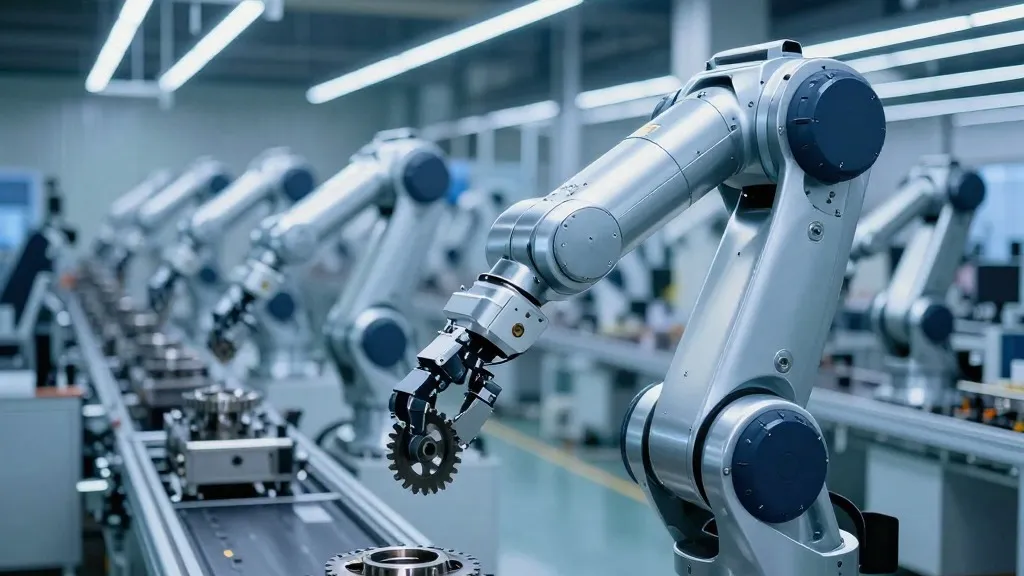
The first key development is the activation of high-volume manufacturing at the Fremont factory. Tesla has installed most of the production line previously used for Model S and X vehicles, which is designed for a massive annual output. Musk stated that reaching a rate of 20,000 units per week will take at least one year, possibly longer, because design elements are still in flux. The company aims to solve core technical hurdles by the end of next year, prioritizing industrial applications that involve dangerous or repetitive labor.
The second major challenge remains the mechanical design of the robot's hands. A Tesla engineer identified the hand as one of the most difficult hardware components to perfect, alongside custom gears that face reliability concerns. Musk explained that the fingers must be soft enough to handle delicate objects yet tough enough to withstand constant wear, a difficult balance since robots cannot heal their own skin like humans. This component, along with the broader electromechanical design, is critical to the robot's long-term viability.
The third issue is the AI architecture and data collection strategy. Unlike Tesla’s vehicle fleet, which continuously gathers data for Full Self-Driving, the robot fleet is still small. To address this, Tesla plans to build between 10,000 and 20,000 units for an "Optimus Academy" where they can practice tasks. The company also intends to integrate its AI5 chip into Optimus around April 2027. Musk promised a video within one to two months showing the robot performing unscripted tasks, arguing that many current demos rely on pre-programmed routines that fail in real-world scenarios.
Contextually, Tesla’s timeline has shifted multiple times since 2024, when Musk initially predicted internal use in 2025 and high-volume external sales in 2026. The Q3 shareholder letter now describes the new Fremont output as the company's first "production-quality" bots, implying previous units were not. Competitors are also advancing; XPeng has automated its IRON production line in Guangzhou and targets deliveries in early 2027, while Boston Dynamics is already deploying its electric Atlas robots in Hyundai plants, having committed all 2026 deployments to clients including Google DeepMind.
The outlook hinges on whether Tesla can solve the generalization problem that plagues all humanoid robotics. While Musk claims no competitor is close to Tesla's progress, rivals like XPeng and Boston Dynamics are executing similar or slightly ahead timelines. Boston Dynamics has taken a pragmatic approach by using sturdy grippers for industrial parts rather than human-like dexterity, effectively bypassing the specific hand issue Tesla cites as a major bottleneck. As Tesla prepares to release its promised demonstration video, the industry watches to see if the late-2027 target will finally hold firm.
Source: Electrek